CCNA Learning Journey
Day 2 : Interfaces and Cables
RJ-45
- RJ : Registered Jack
-
45 : Designed number
- Ethernet is a collection of network protocols/standards.
Ethernet Standards:
- Defined in IEEE 802.3 stanadard in 1983
- IEEE = Institute of Electrical and Electronics Engineers
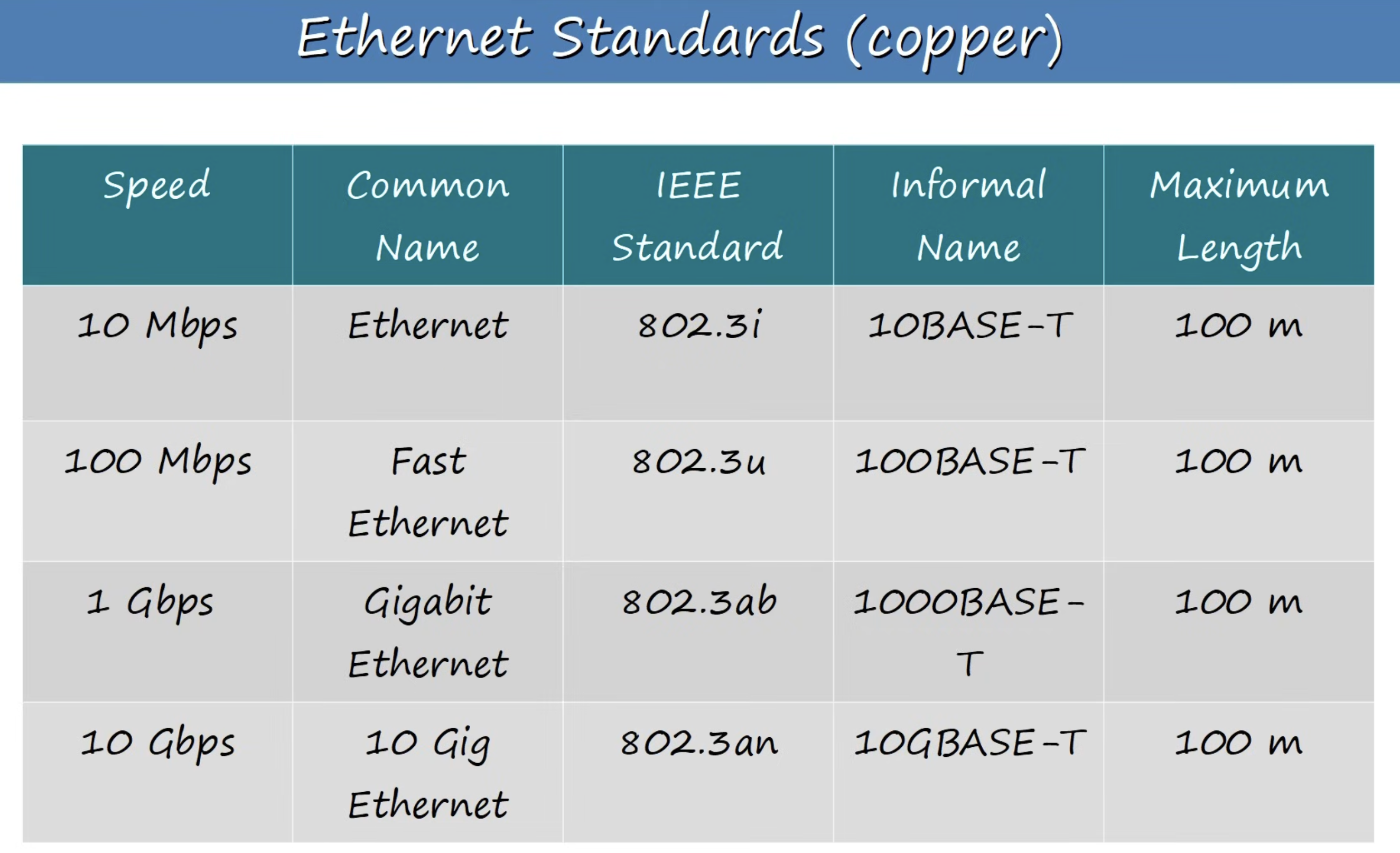
- BASE : refers to baseband signalling
- T : twisted pair
UTP Cables
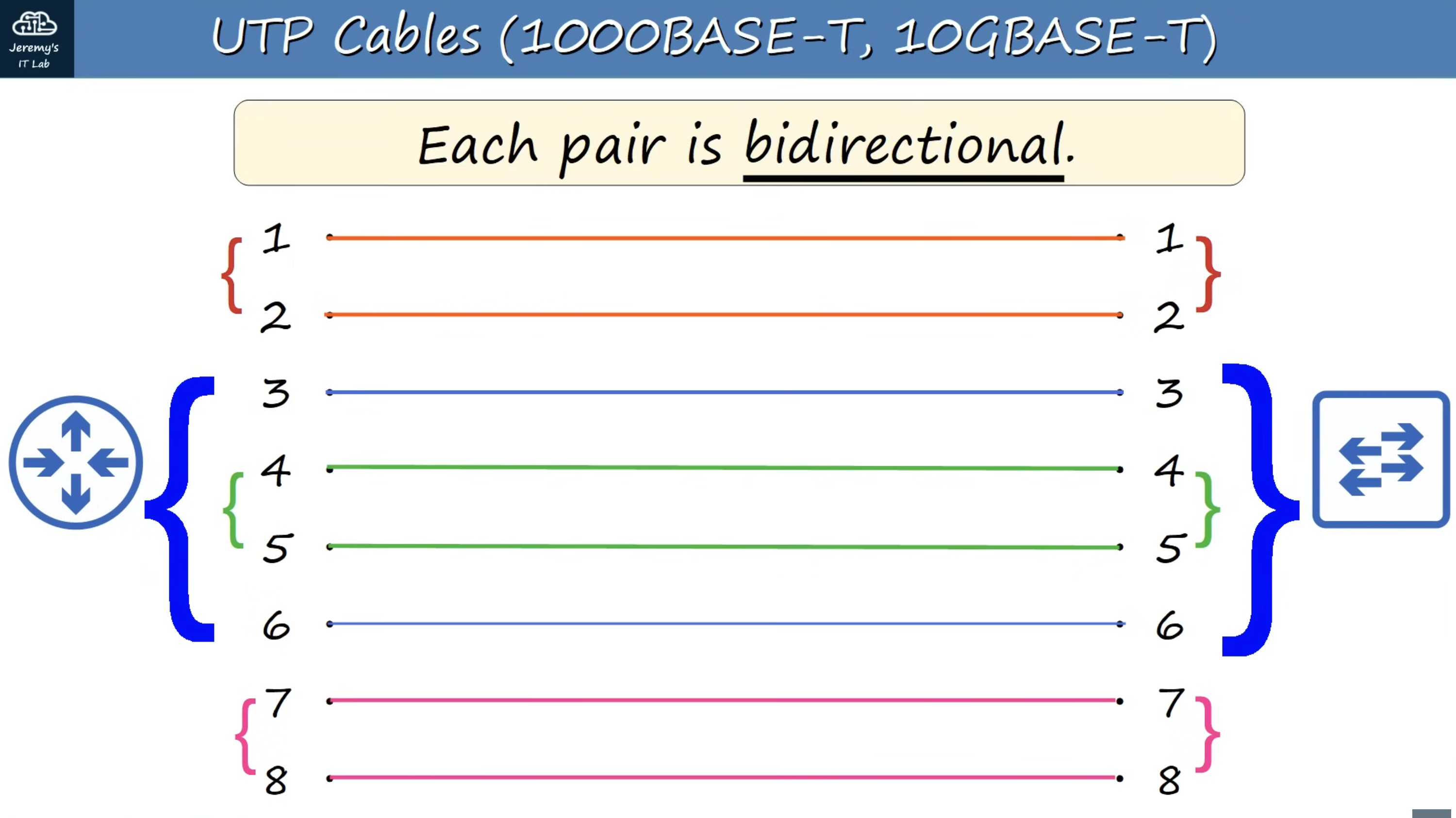
2 Pairs (4 wires): - 10Base-T - 100Base-T
4 Pairs (8 wires): - 1000Base-T - 10GBase-T
- Straight Through Cable: connects Pin 1 on one end to Pin 1 on other end and so on.
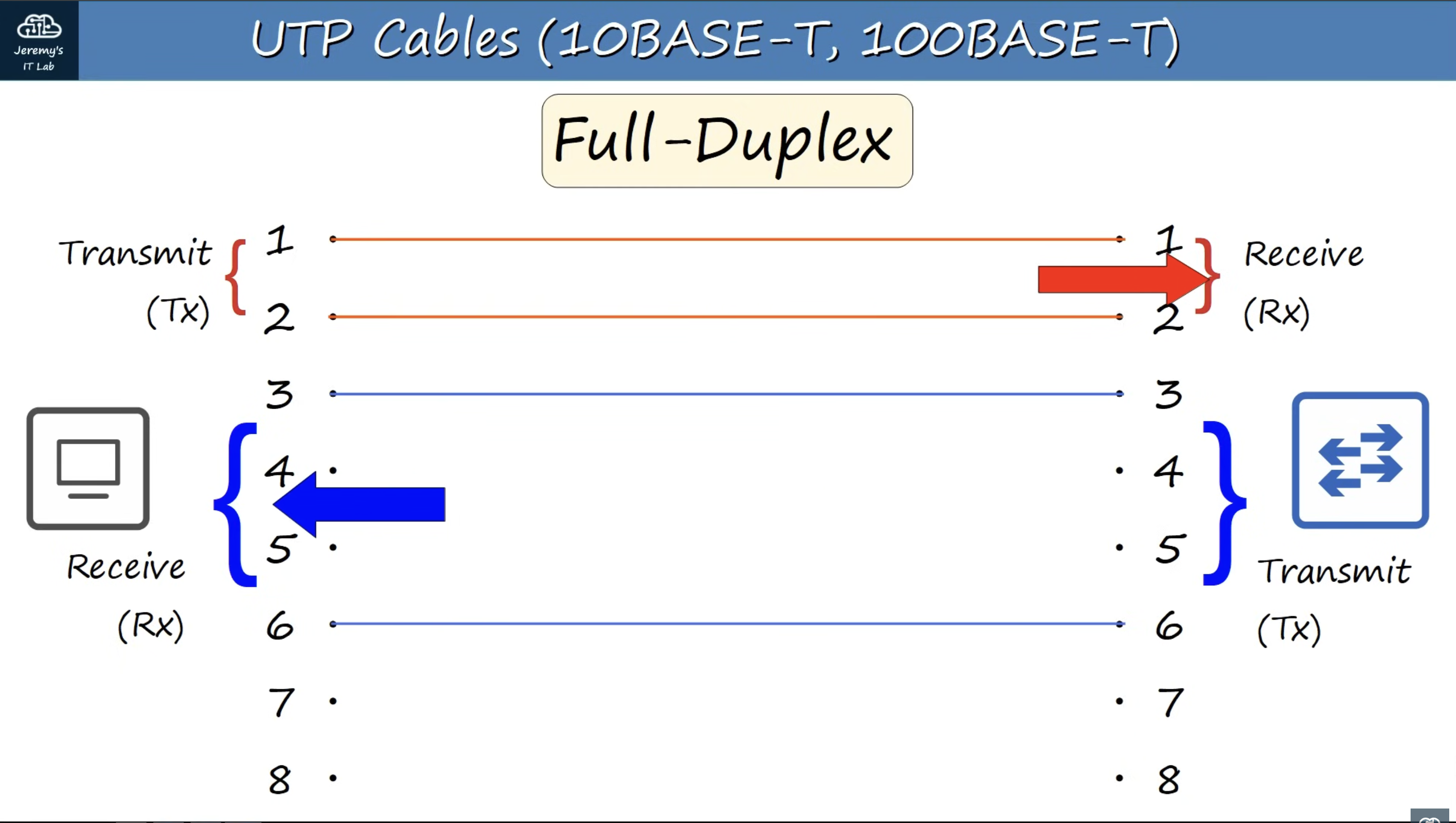
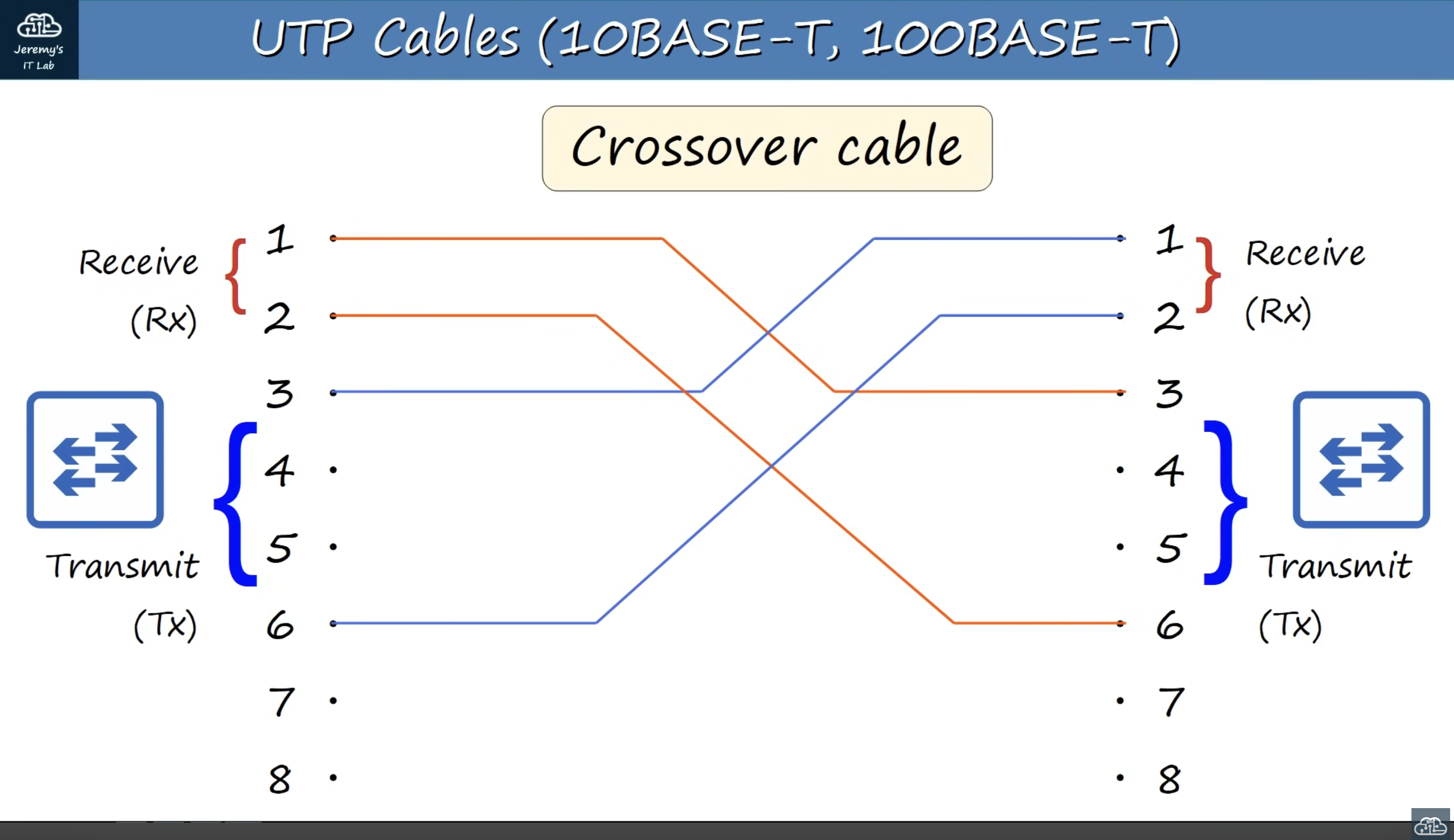
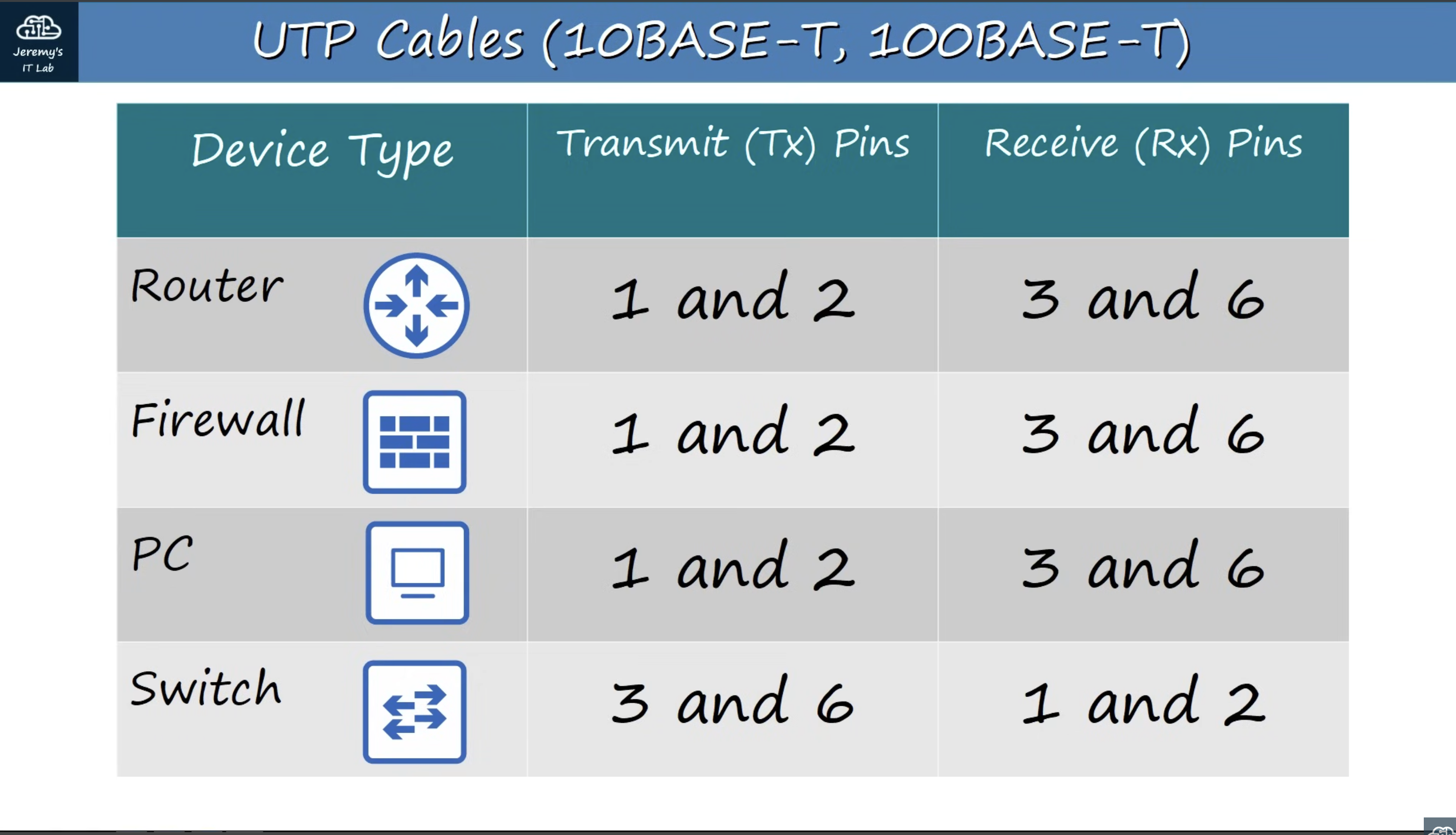
Auto MDI-X
- allows devices to automatically detect which pins their neighbouring devices is transmitting data in and adjust itself to transmit or receive data.
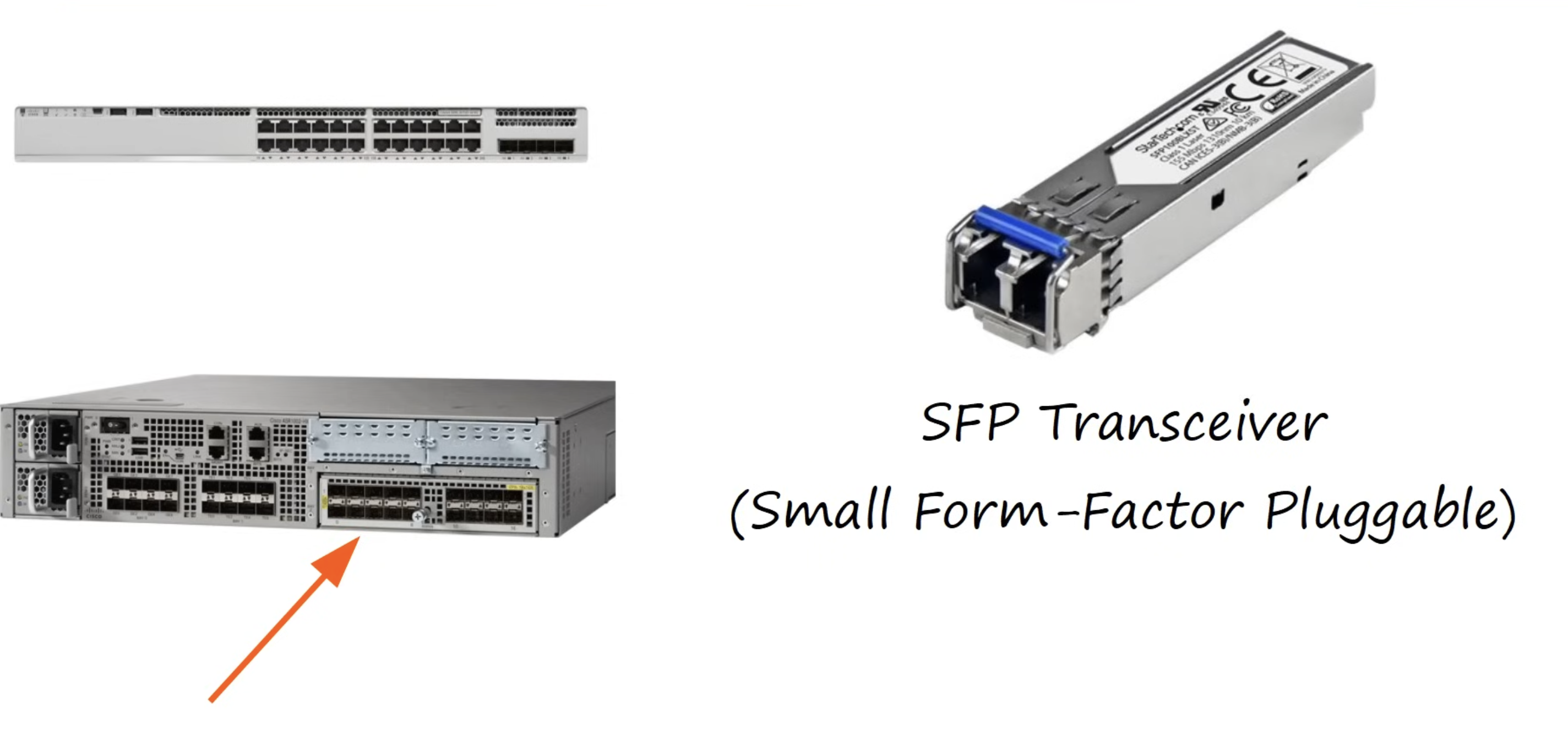
SFP Transceiver (Small Form-Factor Pluggable)
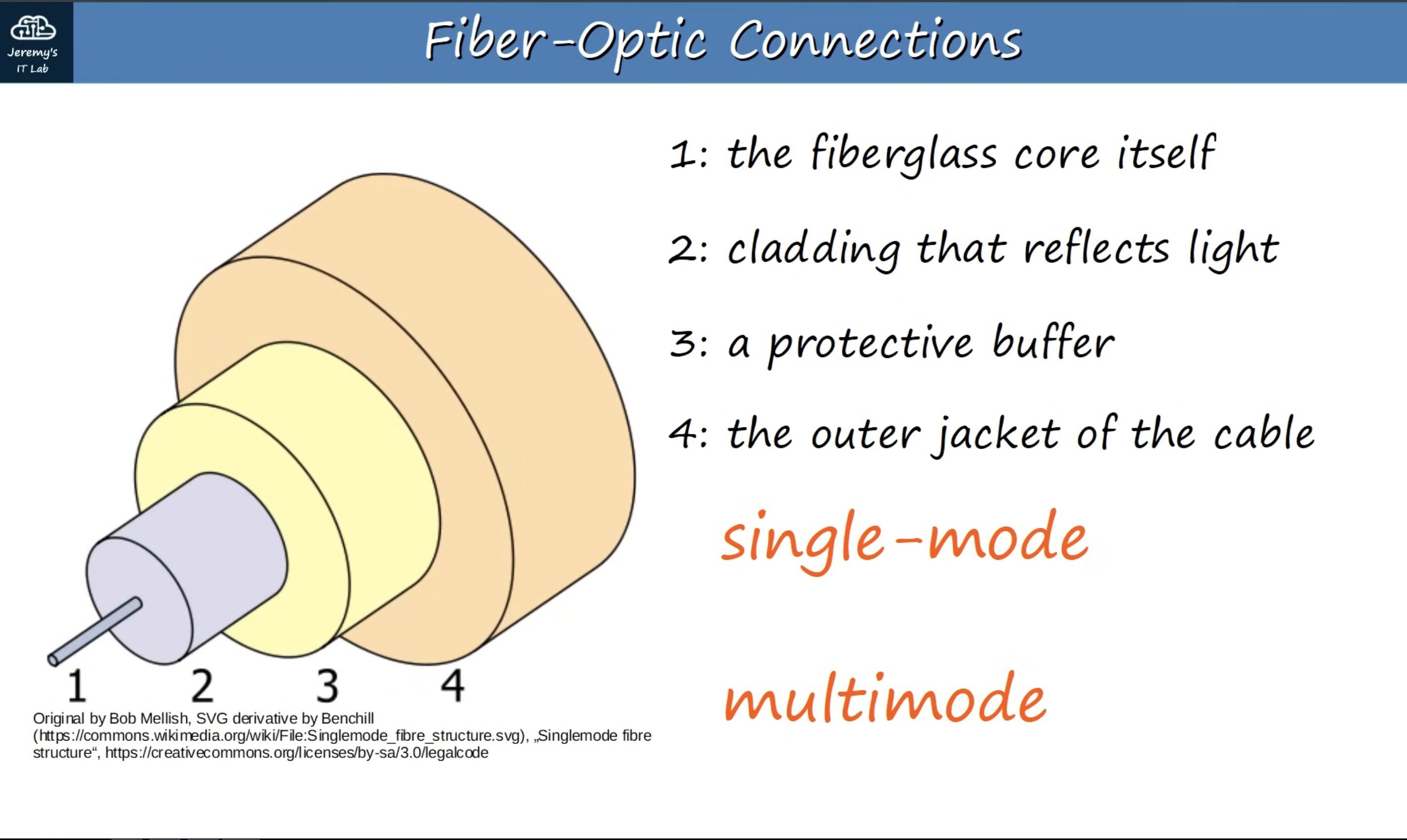
Fiber-Optic Connections
- Uses separate cable to transmits and receive data.
Multimode Fiber
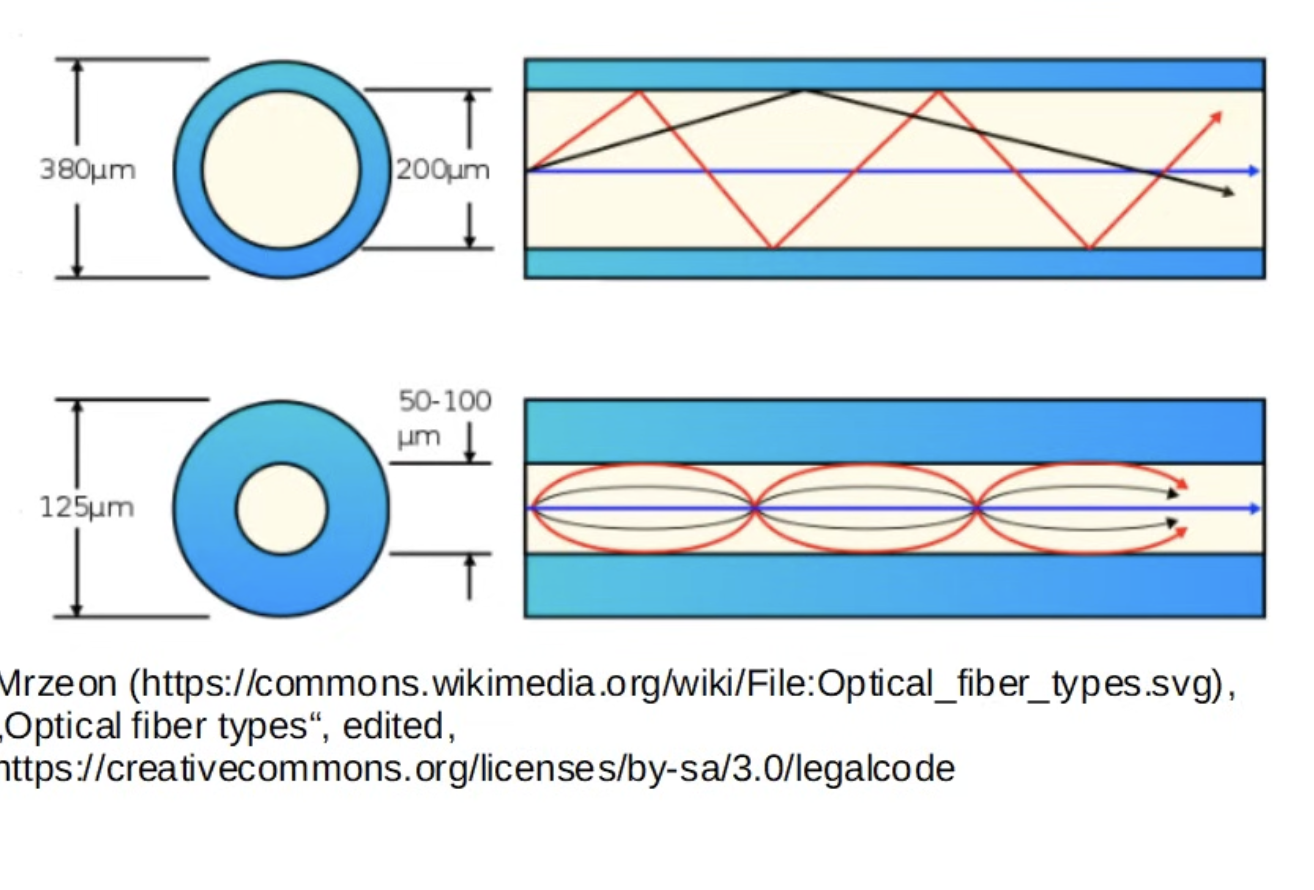
- Core diameter is wider than single mode fiber.
- Allows multiple andles (modes) of light waves to enter the fiberglass core.
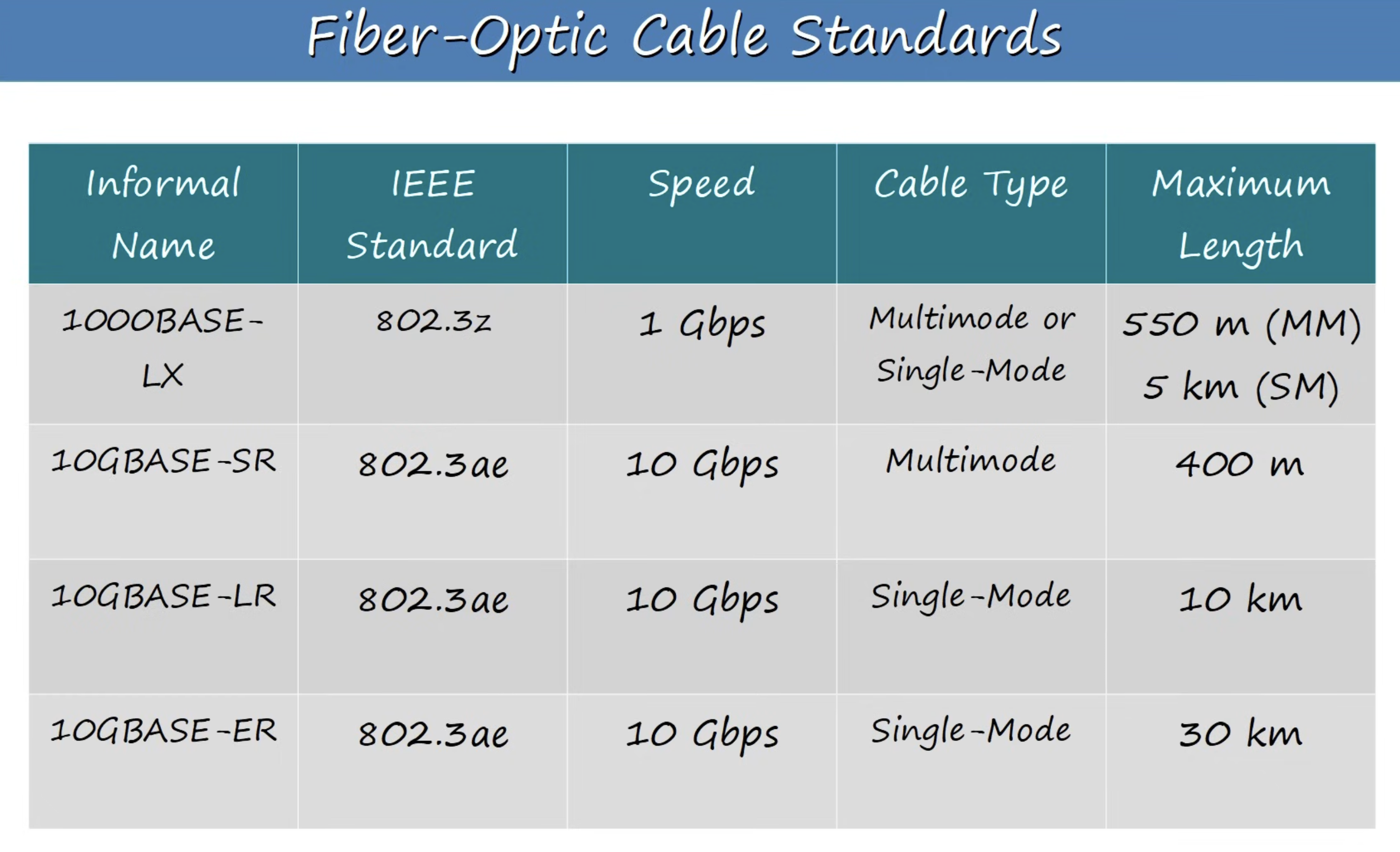
- Allows longer cables than UTP, but shorter cables than single-mode fiber.
- Cheaper than single-mode fiber (due to cheaper LED-based SFP transmitters)
Single Mode Fiber
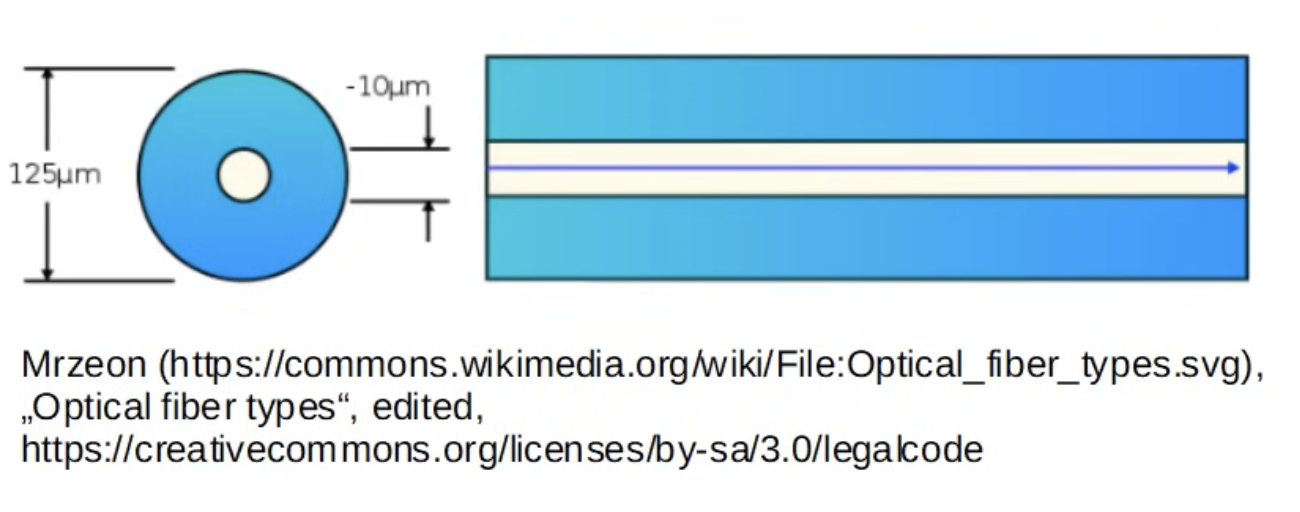
- Core diameter is narrower than multimode fiber.
- Light enters at a single angle(mode) from a laser-based transmitter.
- Allows longer cables than both UTP and multimode fiber.
- More expensive than multimode fiber (due to more expensive laser-based SFP transmitters)
UTP Vs Fiber-Optic Cabling
| UTP | Fiber-Optic |
| Lower cost than fiber-optic. | Higher cost than UTP. |
| Shorter maximum distance than fiber-optic (~100m). | Longer maximum distance than UTP |
| Can be vulnerable to EMI (Electromagnetic Interference). | No vulverability to EMI |
| RJ45 ports used with UTP are cheaper than SFP ports. | SFP ports are more expensive than RJ45 ports (single-mode is more expensive than multimode) |
| Emit (leak) faint signal outside of the cable, which can be copied (=security risk) | Doesn not emit any signal outside of tha cable (=no security risk) |